Immersive internet technology is changing how we work, learn, and connect online. Instead of simply viewing a screen, you step inside a digital space — using virtual reality (VR), augmented reality (AR), and mixed reality (MR) to interact with 3D environments that feel remarkably real.
From virtual meetings to interactive training and next-gen shopping, this technology is moving fast. In this article, we break down what immersive internet technology actually is, why it matters, and where it’s heading next — so you can stay ahead of the curve.
Introduction
Immersive internet technology is the next major evolution of how people interact with digital spaces. Instead of browsing flat pages on a screen, users step into three-dimensional environments where sight, sound, and increasingly touch and motion are part of the experience. This shift matters because it changes the way we work, learn, socialize, and shop online. Understanding the fundamentals of What Is Immersive Internet Technology and Where Is It Heading helps you make informed decisions about the tools, platforms, and skills worth investing your time in.
At its core, immersive internet technology blends virtual reality (VR), augmented reality (AR), mixed reality (MR), spatial computing, and high-speed networking into a single connected ecosystem. It is not one product but a convergence of several technologies that together create a sense of presence — the feeling of actually being somewhere rather than just looking at a screen. This article explores What Is Immersive Internet Technology and Where Is It Heading with clear, practical guidance so you can separate genuine progress from hype.
Whether you are a professional curious about remote collaboration, a student exploring new learning formats, or simply someone who wants to understand where the internet is going next, the information here is designed to be actionable. Reliable information and consistent habits lead to better long-term outcomes, and that principle applies just as strongly to navigating immersive tech as it does to any other area of life.
Key Concepts
To make sense of immersive internet technology, you first need a working vocabulary. Below are the core ideas that appear again and again in industry discussions and product announcements.
- Virtual Reality (VR): A fully digital environment that replaces your physical surroundings, usually accessed through a headset. You are transported somewhere else entirely.
- Augmented Reality (AR): Digital content overlaid onto the real world, often through a phone camera or smart glasses. Think navigation arrows on the street or virtual furniture placed in your living room.
- Mixed Reality (MR): A blend where virtual objects interact with real-world surfaces and respond to your movements in real time. It sits between VR and AR on the immersion spectrum.
- Spatial Computing: The broader discipline of making computers understand and respond to physical space and human gestures, rather than just keyboards and mice.
- Presence: The psychological sensation of “being there” inside a digital environment. High presence is the goal of every immersive system.
- WebXR: An open web standard that lets immersive experiences run directly in a browser without a dedicated app, making the technology more accessible.
- Latency and Bandwidth: The network conditions that determine whether an immersive experience feels smooth or jarring. Low latency is essential for real-time interaction.
These concepts are not isolated. A single immersive platform might use VR for deep focus, AR for quick tasks, and cloud streaming to deliver heavy graphics without expensive hardware. Understanding how they fit together is the foundation for evaluating any new product or trend.
Deep Dive
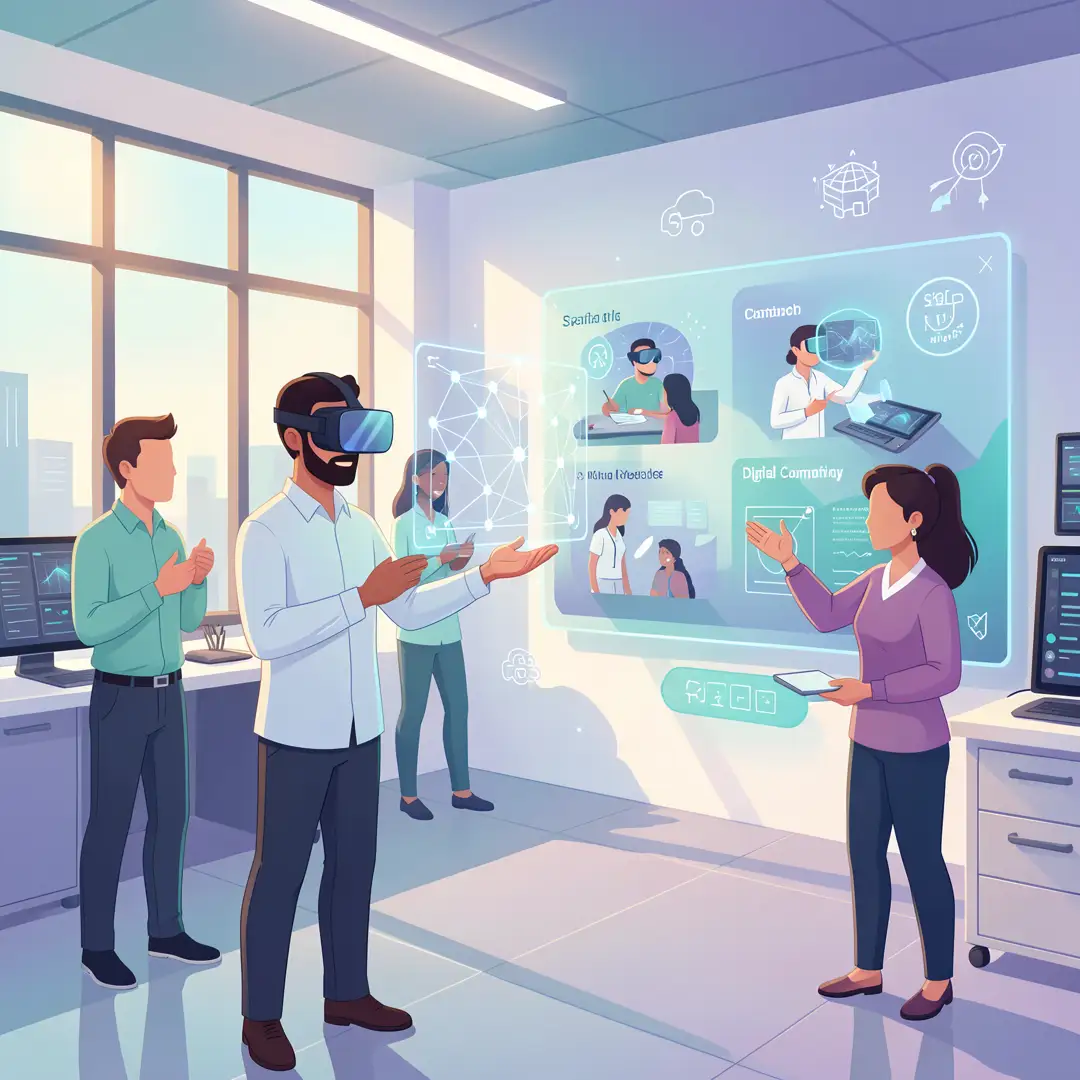
The immersive internet is best understood as a stack of layers, each building on the one below it. At the bottom is connectivity — 5G, Wi-Fi 6E, and eventually 6G — which provides the speed and low latency that immersive experiences demand. Above that sits the hardware layer: headsets, smart glasses, haptic gloves, and motion trackers. Next is the software layer, including game engines, spatial operating systems, and WebXR frameworks. At the top are the applications and content: virtual meetings, immersive training simulations, social worlds, and digital storefronts.
The Role of Hardware
Hardware has historically been the bottleneck. Early VR headsets were bulky, expensive, and tethered to powerful PCs. Today, standalone headsets with inside-out tracking have made VR far more accessible, while lightweight AR glasses are beginning to reach consumers. The trend is clear: devices are getting smaller, cheaper, and more capable. This matters because widespread adoption depends on hardware that people are willing to wear for extended periods.
The Role of Software and Standards
Software is where the ecosystem becomes truly powerful. Open standards like WebXR mean that immersive content can be accessed through a link rather than a downloaded app, reducing friction dramatically. Meanwhile, AI is being used to generate 3D environments, animate avatars, and personalize experiences in real time. The combination of open standards and AI-driven content creation is accelerating the pace at which new immersive experiences appear.
Where the Technology Is Heading
Looking ahead, several directions stand out. First, the “metaverse” concept — persistent, interconnected virtual worlds — continues to evolve, though it is likely to arrive in practical, focused forms rather than as one giant universe. Second, enterprise adoption is growing faster than consumer adoption, with companies using immersive tech for training, design reviews, and remote assistance. Third, the line between the physical and digital will blur further through AR, where digital information becomes a natural layer on top of everyday life. Finally, accessibility improvements, such as hand tracking and voice control, will make immersive technology usable by a broader range of people.
It is worth noting that progress will not be linear. Some promised breakthroughs will stall, while others will arrive ahead of schedule. The practical approach is to focus on capabilities that are already useful today rather than waiting for a fully realized vision of the future.
Best Practices
Whether you are evaluating immersive tools for personal use or planning to adopt them in an organization, certain habits and guidelines consistently lead to better results.
- Start with a specific use case. Immersive technology is most valuable when it solves a concrete problem, such as reducing travel for meetings or improving safety training. Avoid adopting technology for its own sake.
- Test before you commit. Demos and pilot programs reveal more than marketing materials. Try multiple devices and platforms before making a purchase decision.
- Prioritize comfort and health. Limit session length, take breaks, and ensure proper lighting and space. Comfort directly affects how much value you get from immersive experiences.
- Check compatibility and standards. Favor platforms that support open standards like WebXR and work across multiple devices. This protects your investment as hardware evolves.
- Keep security and privacy in mind. Immersive devices collect significant data about movement, gaze, and environment. Review privacy settings and understand what is being recorded.
- Invest in skills, not just gear. Learning 3D design, spatial thinking, or basic development skills will pay off more than any single device.
- Stay informed through reliable sources. Follow standards bodies, reputable tech publications, and hands-on reviews rather than hype-driven headlines.
These practices are not complicated, but they require consistency. Reliable information and consistent habits lead to better long-term outcomes, and immersive technology rewards users who approach it methodically rather than impulsively.
Step-by-Step Guide to Getting Started
The following steps provide a practical path for anyone who wants to move from curiosity to confident use of immersive internet technology. Each step builds on the previous one, so work through them in order.
Step 1: Understand the fundamentals
Before spending money or time, make sure you can clearly explain the differences between VR, AR, and MR, and understand what presence means. Read introductory articles, watch reputable explainer videos, and note which use cases appeal to you most. This foundational knowledge prevents costly mistakes and helps you ask better questions when evaluating products.

Step 2: Assess your starting point
Take stock of what you already have. Do you own a capable smartphone or PC? Is your internet connection fast and stable enough for streaming? Do you have a space where you can move around safely? Understanding your current setup tells you what you need to add and what you can work with right away. It also helps you set realistic expectations.
Step 3: Set clear goals
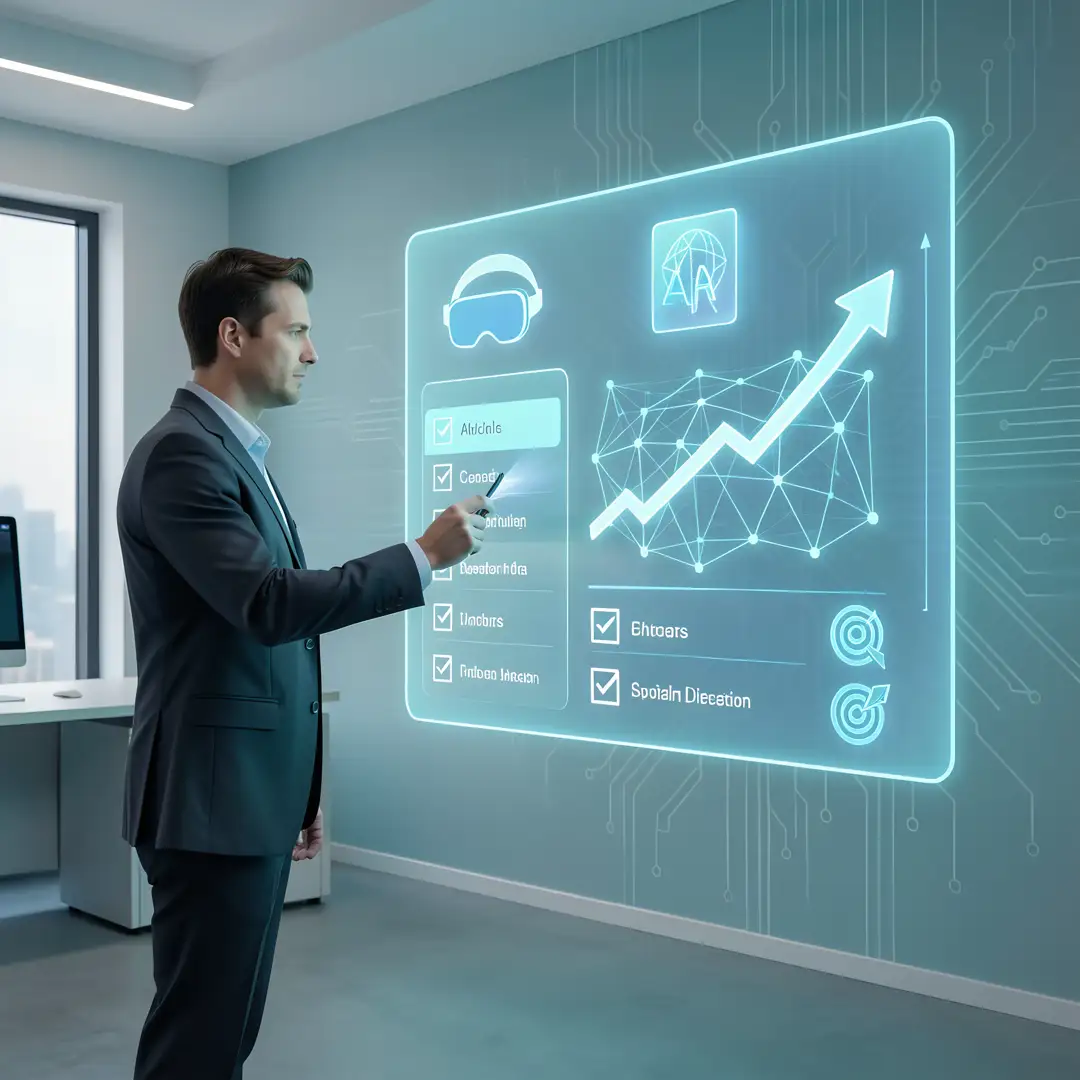
Define what success looks like for you. Are you trying to improve remote collaboration, learn a new skill, explore virtual travel, or simply stay informed about a growing trend? Write down two or three specific goals. Clear goals make it easier to choose the right platform and to measure whether your efforts are paying off.

Step 4: Gather necessary resources
Based on your goals, identify the resources you need. This might include a standalone headset, a compatible smartphone, a subscription to an immersive platform, or simply a quiet room with enough space. Budget for both hardware and content. If you are part of an organization, check whether your IT team has guidelines or existing equipment you can use.
Step 5: Apply the core methods
Now put the technology to work. Start with short, low-pressure sessions. Explore a virtual meeting space, try an AR measurement app, or complete a simple VR tutorial. Focus on one application at a time rather than jumping between many. Pay attention to how the experience feels and whether it addresses your goals from Step 3. Adjust your approach based on what you learn.
Step 6: Monitor your progress
Review your experience regularly. Are you using the technology consistently? Is it delivering the value you expected? Track simple metrics such as time saved, skills gained, or satisfaction with the experience. If something is not working, change it. If it is working, consider expanding to more advanced use cases. Continuous review keeps your efforts aligned with your goals and prevents wasted investment.
FAQ
What should I know about What Is Immersive Internet Technology and Where Is It Heading?
The most important thing to know is that immersive internet technology is a convergence of VR, AR, MR, spatial computing, and high-speed networking, not a single product. It is evolving quickly, with enterprise applications leading adoption and consumer applications catching up. Understanding the fundamentals helps you make informed decisions about which tools and platforms deserve your attention. It is also wise to focus on capabilities that are useful today rather than waiting for a fully realized future vision. Reliable information and consistent habits lead to better long-term outcomes.
Who is this guide for?
This guide is for anyone seeking clear, actionable information about immersive internet technology. That includes professionals curious about remote collaboration, students exploring new learning formats, business leaders evaluating new tools, and general readers who want to understand where the internet is heading. No technical.
You now have a solid foundation for What Is Immersive Internet Technology and Where Is It Heading. Apply the best practices above and revisit this guide as your needs evolve.