Data centers power everything from your favorite streaming service to the apps on your phone, but all that computing comes with a hefty energy bill. For years, these facilities were criticized for their enormous electricity use—yet that story is rapidly changing. Thanks to smarter design and innovative cooling, modern data centers are becoming dramatically more energy efficient.
In this article, we’ll explore the key technologies and strategies driving this shift, from AI-optimized cooling to renewable power. Whether you’re a business owner or simply curious about sustainability, you’ll discover practical insights into how data centers are cutting waste while keeping the digital world running.
Introduction
Data centers are the unseen engine rooms of the digital economy. Every search query, streaming video, cloud backup, and AI-generated response depends on rows of servers humming inside warehouses that can consume as much electricity as a small town. For years, the story was one of unchecked growth: as demand for digital services grew, so did energy consumption. But that narrative has changed. Modern data centers are becoming more energy efficient at a pace that surprises even industry veterans, and the reasons matter to anyone who uses the internet, pays an electricity bill, or cares about the environmental footprint of technology.
This article explores How Modern Data Centers Are Becoming More Energy Efficient with clear, practical guidance. You do not need to be an engineer to understand the shift. Whether you are a business owner evaluating cloud providers, a facilities manager looking for efficiency ideas, a student researching sustainable infrastructure, or simply a curious reader, the concepts here are accessible. Understanding the fundamentals of How Modern Data Centers Are Becoming More Energy Efficient helps you make informed decisions, and reliable information combined with consistent habits leads to better long-term outcomes.
The stakes are significant. The International Energy Agency has estimated that data centers account for roughly 1 to 1.5 percent of global electricity use, a figure that could rise as artificial intelligence and high-performance computing expand. Yet efficiency gains have largely offset that growth so far. The techniques driving this improvement—advanced cooling, smarter power distribution, better workload management, and a focus on renewable energy—are not secret. They are proven, repeatable, and increasingly standard. This guide breaks them down in plain language.
Key Concepts
Before diving into specifics, it helps to establish the vocabulary and ideas that underpin data center efficiency. These concepts recur throughout the industry and give you the tools to evaluate claims you encounter.

Power Usage Effectiveness (PUE)
PUE is the most widely used metric for data center efficiency. It is calculated by dividing total facility energy use by the energy delivered to computing equipment. A PUE of 2.0 means that for every watt powering servers, another watt is consumed by cooling, lighting, and other overhead. A PUE of 1.1 means overhead is only 10 percent. Older data centers often ran above 2.0; many modern hyperscale facilities now operate between 1.1 and 1.2. Lower is better, though no facility can reach 1.0 because some overhead is unavoidable.
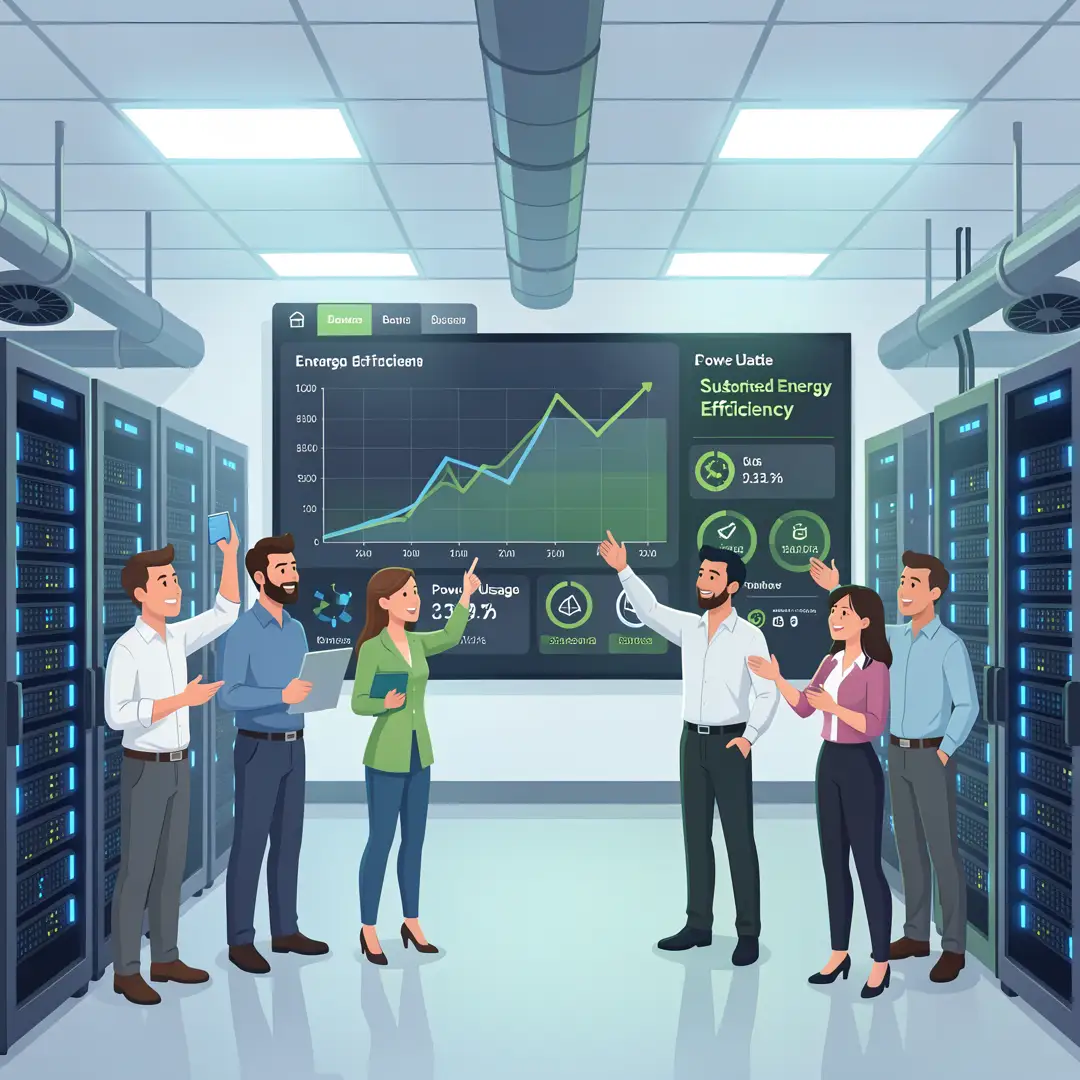
Cooling and Airflow
Cooling historically consumed the largest share of non-computing energy in a data center. Servers generate heat, and that heat must be removed to prevent failures. Traditional raised-floor, cold-aisle/hot-aisle designs improved airflow, but modern approaches go further. Techniques such as direct liquid cooling, rear-door heat exchangers, and free cooling (using outside air when temperatures allow) reduce or eliminate the need for energy-intensive chillers.
Virtualization and Consolidation
Many physical servers once ran a single application. Virtualization allows multiple virtual machines to share one physical server, dramatically raising utilization rates. Consolidation retires underused hardware. Together, these practices mean fewer servers doing more work, which cuts both hardware costs and energy use.
Renewable Energy and Carbon-Aware Computing
Efficiency is not only about using less power; it is also about where that power comes from. Many operators now procure wind, solar, and hydroelectric energy through power purchase agreements. Carbon-aware computing goes a step further, scheduling flexible workloads—like batch processing or model training—to run when renewable energy is abundant, such as a sunny afternoon or a windy night.
The Role of Scale
Hyperscale data centers operated by major cloud providers achieve some of the best efficiency numbers because they can invest in custom hardware, advanced cooling, and sophisticated software at enormous scale. Smaller colocation facilities and enterprise data centers face different constraints but can adopt many of the same principles.
Deep Dive
To see how efficiency gains happen in practice, it helps to look at a few areas where modern data centers have made the most dramatic progress.
AI-Driven Optimization
Artificial intelligence is often cited as a driver of data center demand, but it is also a tool for efficiency. Google famously applied machine learning to its cooling systems, achieving roughly a 40 percent reduction in cooling energy. The system uses sensor data—temperature, pressure, pump speed—to predict how adjustments will affect conditions and make continuous small changes. Humans cannot monitor thousands of variables every few seconds; algorithms can. Similar approaches now optimize power distribution, workload placement, and even hardware failure prediction.
Liquid Cooling for High-Density Racks
AI and high-performance computing workloads pack more transistors into smaller spaces, generating heat that air cooling struggles to remove. Liquid cooling, whether direct-to-chip or full immersion, transfers heat far more effectively. It also allows operators to reuse waste heat, for example by piping it into district heating systems or greenhouses. This turns a waste stream into a resource.
Power Distribution Improvements
Older data centers lost energy at every conversion step: from high-voltage transmission to uninterruptible power supplies, to power distribution units, to server power supplies. Modern designs use higher voltages, more efficient transformers, and fewer conversion stages. Some facilities adopt direct current (DC) power distribution, eliminating redundant AC-to-DC conversions.
Hardware Efficiency and Refresh Cycles
Each generation of processors, memory, and storage delivers more computing per watt. Regular hardware refresh cycles retire inefficient equipment before it becomes a drag on the facility. Custom silicon, such as ARM-based server chips, has improved performance-per-watt for specific workloads. The trade-off is embodied carbon—the emissions from manufacturing new hardware—so operators increasingly weigh replacement against continued use.
Software and Workload Management
Efficiency is not purely a hardware problem. Scheduling workloads across time zones, shifting non-urgent tasks to low-demand periods, and dynamically powering down idle servers all reduce energy use. Containerization and orchestration tools like Kubernetes help pack workloads more densely, raising utilization and lowering the number of active machines.
The Bigger Picture: Water and Land Use
Energy efficiency often intersects with water consumption. Evaporative cooling uses water to save electricity, which can strain local supplies. Leading operators now publish water usage effectiveness (WUE) alongside PUE and invest in closed-loop cooling or reclaimed water. Similarly, siting decisions consider grid carbon intensity, renewable availability, and community impact.
Best Practices
The following practices represent proven approaches that data center operators, and the organizations that use them, can apply to improve energy efficiency. They range from strategic decisions to daily habits.
- Measure before you manage. Establish baseline PUE, energy consumption by subsystem, and utilization rates. Without data, improvements are guesswork.
- Adopt a holistic efficiency strategy. Cooling, power distribution, hardware, and software interact. Optimizing one while ignoring others yields limited gains.
- Raise operating temperatures where safe. Many facilities run colder than necessary. Industry standards now permit higher supply air temperatures, reducing cooling load.
- Use free cooling whenever possible. Climate-appropriate sites can use outside air or water-side economizers for much of the year.
- Consolidate and virtualize. Retire underused servers and raise utilization on the remaining fleet.
- Invest in modern cooling. Consider liquid cooling for high-density racks and rear-door heat exchangers for retrofits.
- Procure renewable energy. Sign power purchase agreements or choose providers with credible renewable commitments.
- Implement carbon-aware scheduling. Shift flexible workloads to times and places where clean energy is abundant.
- Track and publish metrics. Transparency builds trust and helps the industry learn. Report PUE, WUE, and carbon intensity.
- Plan for the long term. Efficiency is a continuous process, not a one-time project. Build a culture of measurement and improvement.
Step-by-Step Guide to Improving Data Center Energy Efficiency
If you are responsible for a data center—or advising one—the following steps provide a practical path from understanding to results. Each step builds on the previous one, and together they form a repeatable cycle.
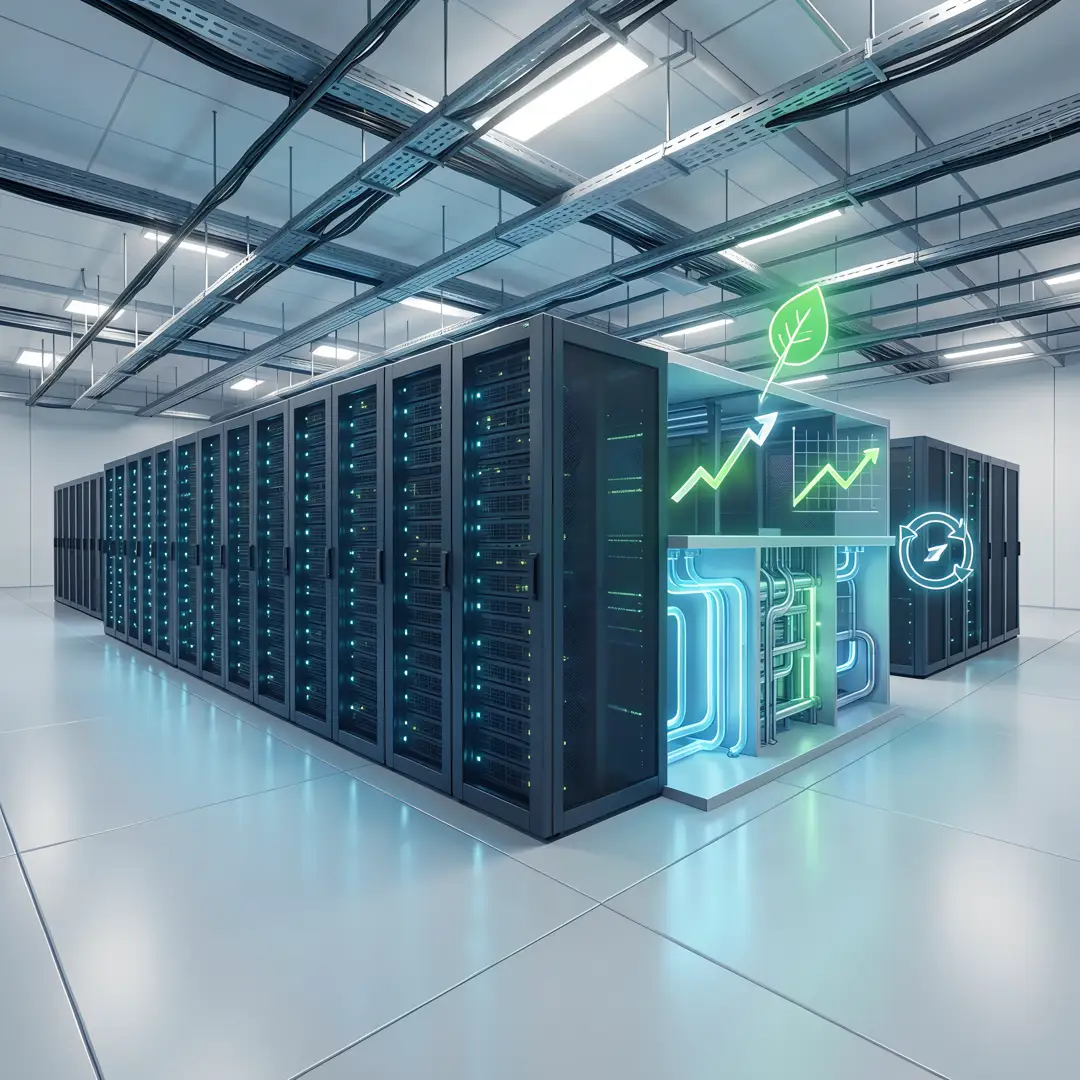
Step 1: Understand the fundamentals
Start by learning the core metrics and concepts: PUE, WUE, carbon intensity, airflow management, virtualization, and the difference between IT load and facility load. Read case studies from operators like Google, Microsoft, and Equinix. Understand that efficiency is not about sacrificing performance; it is about delivering the same or better service with less energy. This foundation lets you ask the right questions of vendors, consultants, and internal teams.
Step 2: Assess your starting point
You cannot improve what you do not measure. Conduct an energy audit that captures total facility consumption, IT equipment consumption, cooling energy, and power distribution losses. Install meters on major circuits if they are missing. Calculate your current PUE and, if possible, WUE. Survey hardware age, utilization rates, and airflow patterns. Interview staff about known hot spots, complaints, and workarounds. The goal is an honest snapshot, not a flattering one.
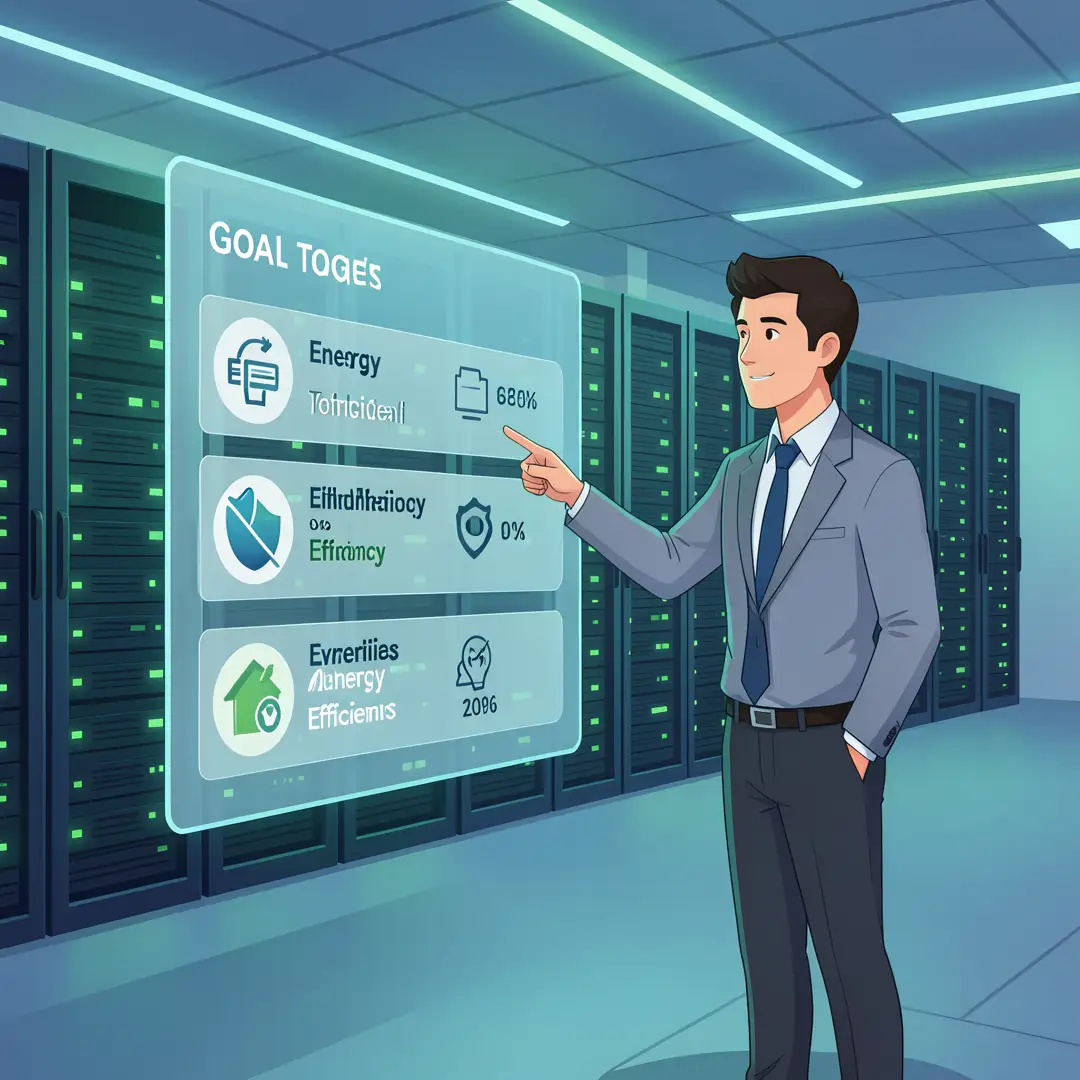
Step 3: Set clear goals
Based on your assessment, define specific, measurable, achievable, relevant, and time-bound (SMART) targets. Examples include reducing PUE from 1.8 to 1.4 within 18 months, raising average server utilization from 15 percent to 40 percent, or sourcing 80 percent of electricity from renewables within three years. Goals should align with organizational priorities—cost savings, sustainability commitments, or regulatory requirements. Write them down and assign ownership.
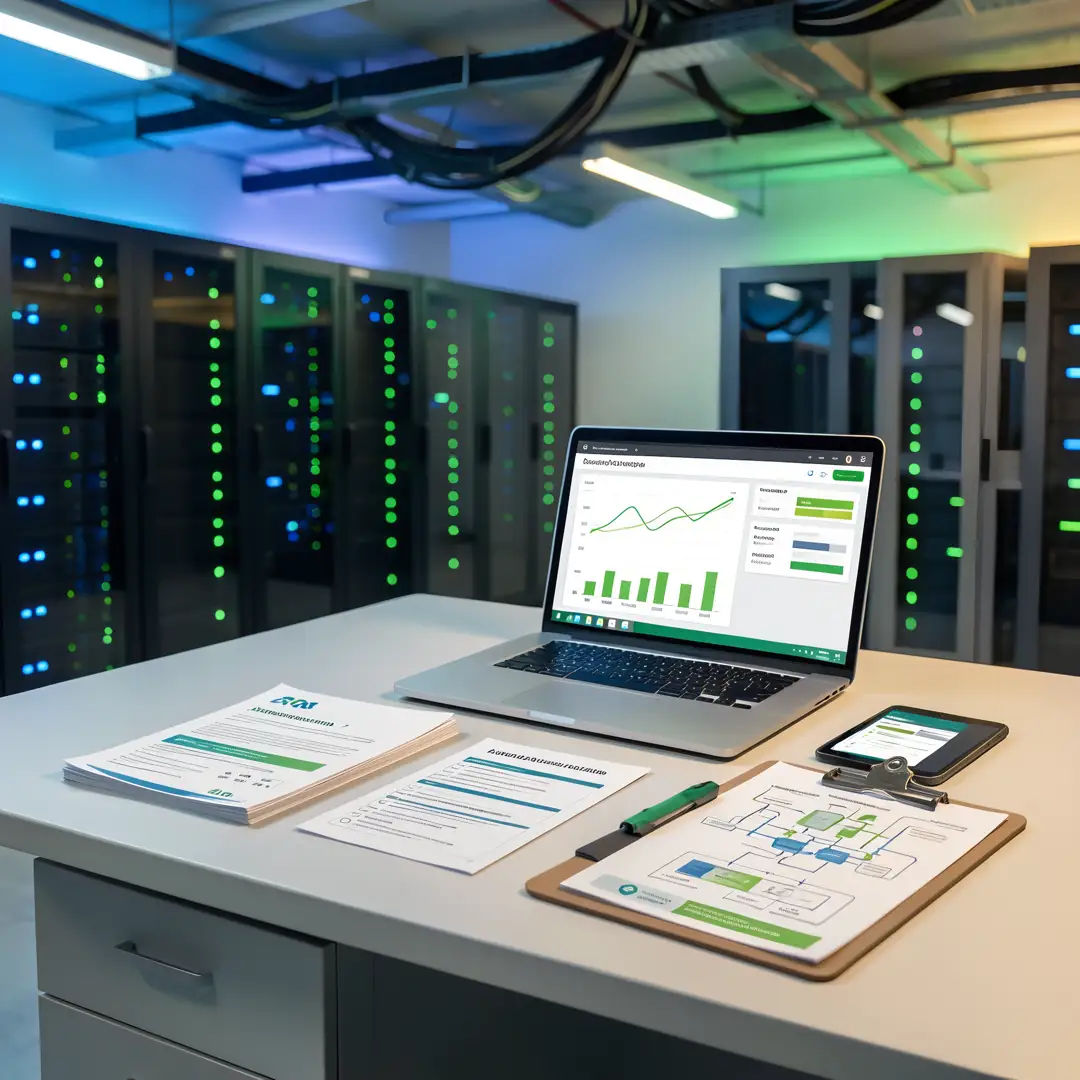
Step 4: Gather necessary resources
Efficiency projects require budget, expertise, and executive support. Identify internal champions and, where needed, external consultants or vendors. Secure funding by building a business case that quantifies expected energy savings, reduced operating costs, and avoided capital expenditure. Explore incentives such as utility rebates, tax credits, and green financing. Ensure you have access to data through monitoring tools and that staff have time to implement changes.
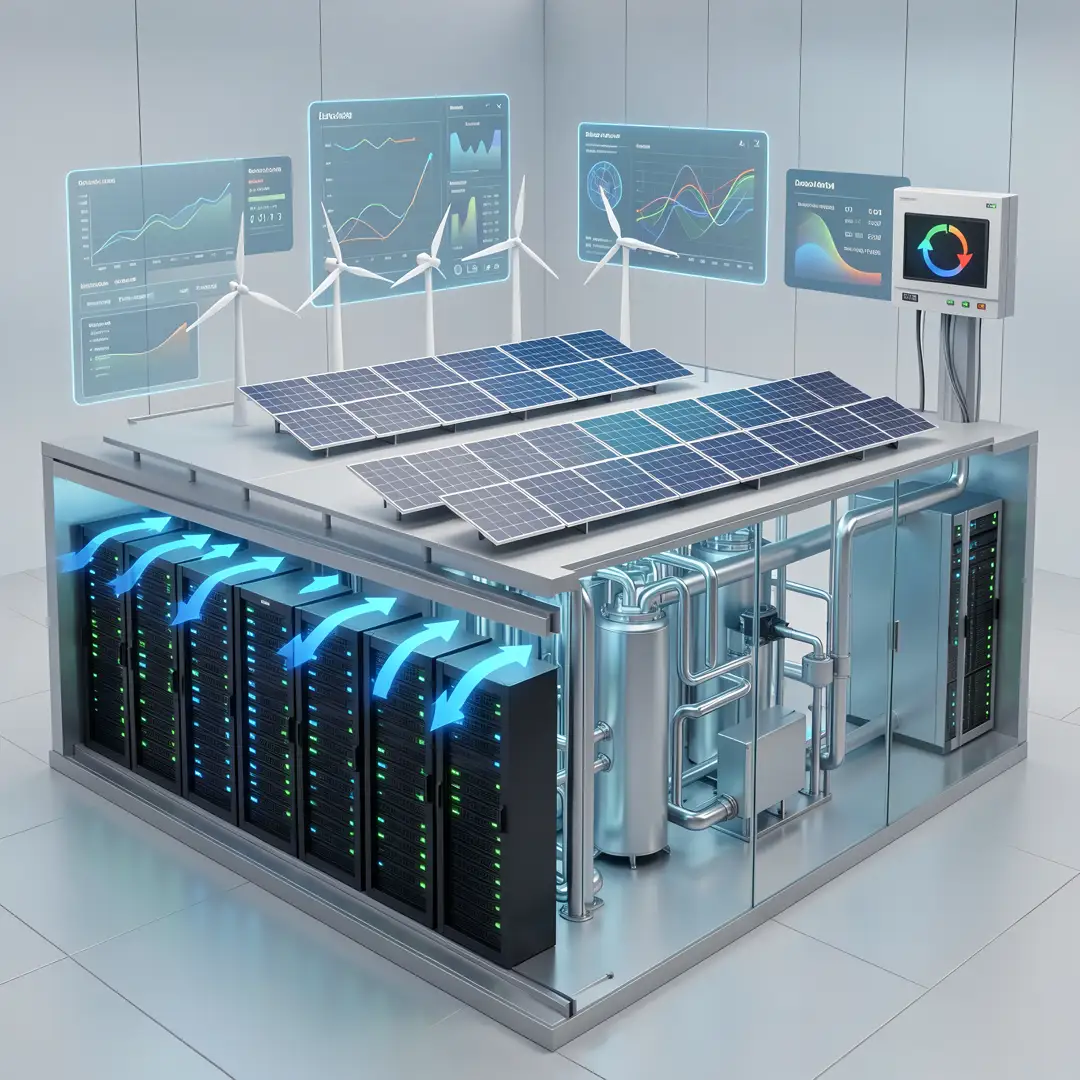
Step 5: Apply the core methods
Now execute. Prioritize quick wins first: seal cable openings, adjust thermostat set points, remove underfloor obstructions, and decommission unused servers. Then move to larger initiatives: deploy containment systems, install variable-speed drives on pumps and fans, upgrade to efficient UPS systems, and pilot liquid cooling for high-density racks. Use software to consolidate workloads and schedule flexible jobs when renewable energy is plentiful. Document what you do and the results you observe.
Step 6: Monitor your progress
Efficiency gains can erode if not maintained. Set up dashboards that track PUE, energy use, utilization, and carbon intensity in real time or near real time. Review.
You now have a solid foundation for How Modern Data Centers Are Becoming More Energy Efficient. Apply the best practices above and revisit this guide as your needs evolve.