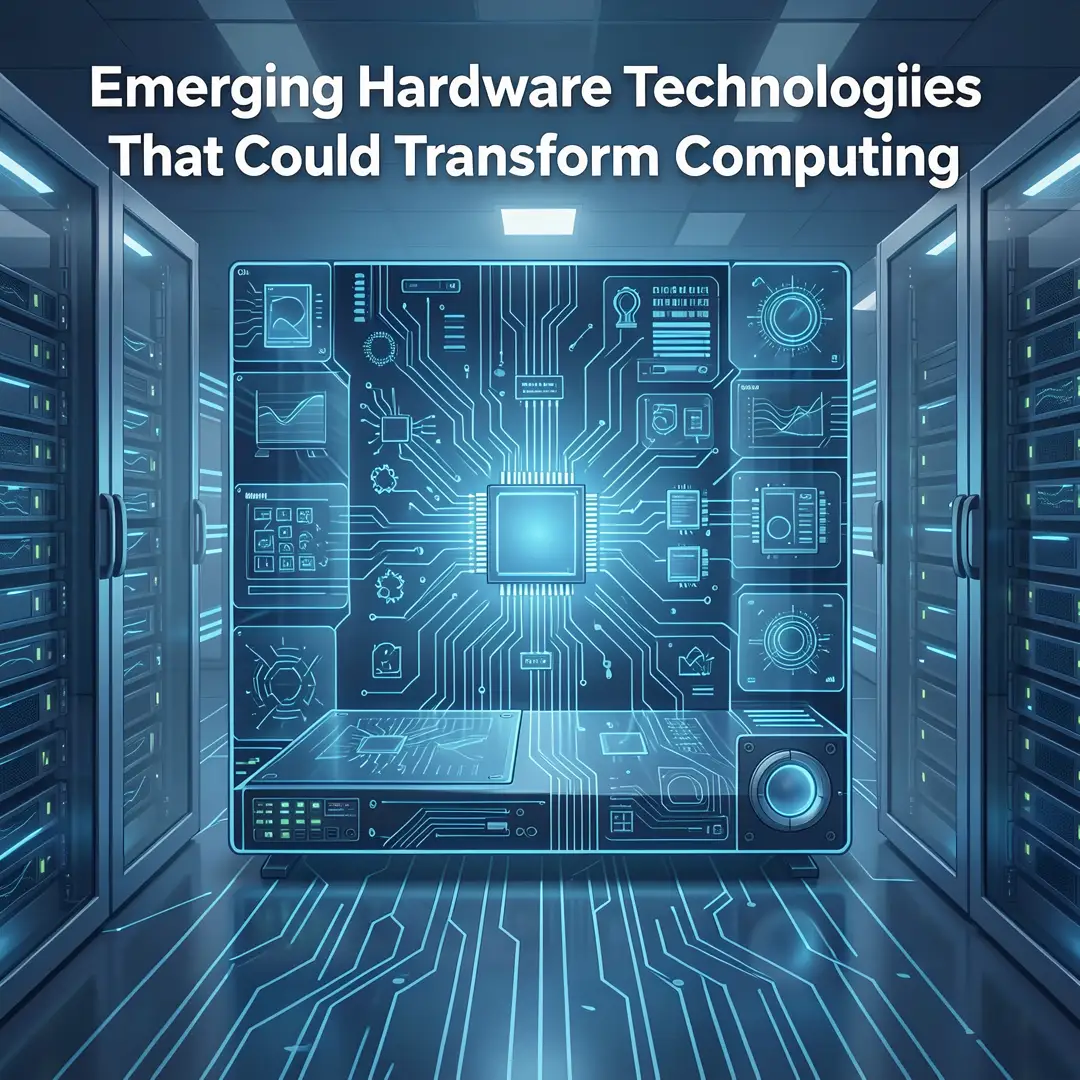
Computing is entering a new era driven by emerging hardware technologies. From neuromorphic chips that mimic the brain to photonic processors that use light instead of electricity, these innovations promise faster speeds, lower energy use, and new capabilities we once thought impossible.
In this article, we break down the most promising emerging hardware technologies, explain what makes each one different, and show how they could reshape everything from data centers to everyday devices. Whether you’re a tech professional or a curious reader, here’s what you need to know.
Introduction
Computing has always been defined by the hardware underneath it. From room-sized mainframes to pocket-sized smartphones, each leap in processor design, memory architecture, and storage technology has rewritten what machines can do. Today, a new wave of hardware technologies is moving from research labs into early commercial products. These emerging technologies could change how we build computers, how much energy they consume, and what kinds of problems they can solve.
This article explores Emerging Hardware Technologies That Could Transform Computing with clear, practical guidance. Understanding the fundamentals of Emerging Hardware Technologies That Could Transform Computing helps you make informed decisions, whether you are a technology professional, a student, a business leader, or simply a curious reader who wants to separate genuine breakthroughs from marketing hype. Reliable information and consistent habits lead to better long-term outcomes, and that principle applies just as strongly to tracking hardware trends as it does to any other area of life.
You do not need an engineering degree to follow along. The goal here is to give you a working mental model of what is changing, why it matters, and how you can position yourself to benefit from these shifts without overcommitting to any single prediction.
Key Concepts
Before diving into specific technologies, it helps to understand a few core ideas that run through nearly every emerging hardware trend.

Beyond von Neumann architecture
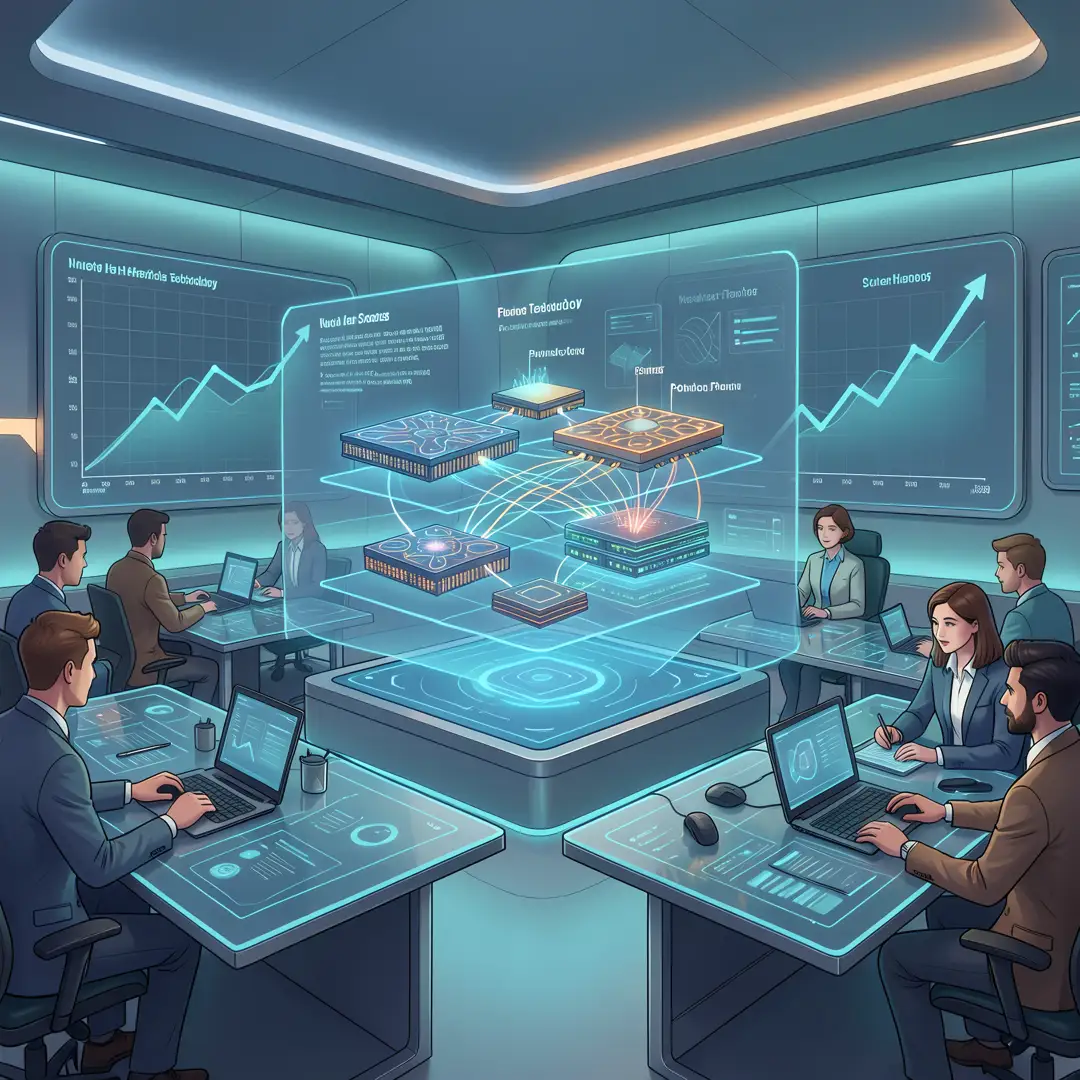
Most computers today follow the von Neumann model, where a processor fetches instructions and data from the same memory pool. This design is flexible, but it creates a bottleneck: data has to shuttle back and forth between memory and processor constantly. Emerging hardware often tries to break or bypass that bottleneck entirely.
Specialization versus general-purpose computing
For decades, the industry chased faster general-purpose CPUs. That era is slowing. Instead, the momentum has shifted to specialized chips, such as graphics processors, tensor processors, and field-programmable gate arrays, that excel at narrow tasks. The trade-off is clear: specialization buys massive efficiency gains but reduces flexibility.
The energy wall
Performance per watt has become the defining metric of modern hardware. Data centers now consume electricity on the scale of small cities, and mobile devices are limited by heat and battery life. Any technology that promises a step change in energy efficiency deserves serious attention.
Memory-centric design
Instead of treating memory as a passive storage bin, new architectures put memory at the center of computation. This includes processing-in-memory and compute-in-memory approaches, where simple calculations happen directly inside the memory array.
Manufacturing at the atomic scale
Chip fabrication is approaching physical limits. Transistors are now measured in single-digit nanometers, and engineers are stacking layers vertically, using new materials, and exploring entirely different switching mechanisms to keep progress alive.
Deep Dive
With those concepts in mind, let us look at the specific hardware technologies that are generating the most serious interest.
Neuromorphic computing
Neuromorphic chips mimic the way biological brains process information. Instead of a central clock ticking through instructions, they use networks of artificial neurons and synapses that fire only when needed. This event-driven approach can be dramatically more energy-efficient for tasks like pattern recognition, sensory processing, and always-on monitoring. Early commercial products already exist for edge devices, and research prototypes show promising results for low-power vision and audio tasks.
Quantum computing hardware
Quantum computers use qubits, which can exist in superposition and become entangled with one another. For certain problems, such as simulating molecules or factoring large numbers, they offer algorithmic speedups that classical machines cannot match. The hardware landscape includes superconducting circuits, trapped ions, photonic systems, and neutral atoms. Each approach has different trade-offs in coherence time, error rates, and scalability. Practical, fault-tolerant quantum computing is still years away, but the hardware is improving quickly enough that organizations in finance, logistics, and chemistry are already experimenting with early access.
Photonic computing
Photonic chips use light instead of electricity to carry and process signals. Light travels faster, generates less heat, and can carry many signals simultaneously without interference. Optical interconnects are already common in data centers, and researchers are now building photonic processors that perform matrix multiplication, a core operation in artificial intelligence, at extremely high speeds. The main challenges are converting between optical and electrical signals and manufacturing at scale.
Processing-in-memory (PIM)
PIM moves computation into the memory itself, eliminating the costly data movement between processor and RAM. This is especially valuable for data-intensive workloads such as database queries, graph analysis, and machine learning inference. Several memory manufacturers have announced PIM products, and the approach is gaining traction in high-performance computing.
Advanced packaging and chiplets
Instead of building one massive chip, manufacturers now combine smaller chiplets into a single package using advanced interconnects. This improves yield, lowers cost, and allows mixing different process technologies. Chiplets are already powering some of the fastest processors on the market, and the approach is spreading to mainstream devices.
New memory technologies
Storage and memory hierarchies are being reshaped by technologies such as MRAM, ReRAM, and phase-change memory. These non-volatile memories retain data without power, switch faster than flash, and endure more write cycles. They promise to blur the line between storage and memory, enabling instant-on devices and more efficient data centers.
Flexible and printed electronics
Not all computing happens on rigid silicon. Flexible circuits, printed sensors, and thin-film transistors are enabling wearable health monitors, smart packaging, and disposable diagnostic devices. These technologies trade raw performance for low cost and physical adaptability.
Best Practices
Keeping up with hardware innovation without getting swept up in hype requires a disciplined approach. Here are practical habits that serve well.
- Follow primary sources. Peer-reviewed papers, manufacturer documentation, and standards bodies beat headlines and social media summaries. When a claim sounds extraordinary, look for the underlying data.
- Track performance per watt, not just peak performance. Raw speed numbers are easy to market but rarely tell the whole story. Energy efficiency usually predicts real-world adoption.
- Distinguish prototypes from products. A lab demonstration is not the same as a shipping device. Ask whether the technology is available to buy, in limited trials, or purely experimental.
- Watch the software ecosystem. Hardware only matters if developers can use it. Compiler support, programming frameworks, and community adoption are strong signals of long-term viability.
- Think in portfolios, not bets. No one knows which of these technologies will dominate in ten years. Spread your attention and, if you are investing or building, avoid depending on a single approach.
- Set a regular review cadence. Once a quarter, check in on the technologies most relevant to your work. Consistent habits lead to better long-term outcomes than sporadic deep dives.
- Prioritize problems over technologies. Start with the problem you need to solve, then ask which hardware approach fits. Letting a favorite technology drive the decision is a common trap.
Step-by-Step Guide
The following sequence will help you build practical familiarity with emerging computing hardware, whether for personal learning, professional planning, or strategic decision-making.
Step 1: Understand the fundamentals
Start by solidifying the basics of how computers work today: instruction cycles, memory hierarchies, parallelism, and the performance-per-watt trade-off. Without this foundation, new technologies are hard to evaluate. Read one solid textbook chapter or a reputable online course module on computer architecture. The goal is not expertise but fluency in the vocabulary that researchers and vendors use.
Step 2: Assess your starting point
Honestly evaluate your current knowledge and your practical constraints. Do you have access to specialized hardware, a budget for experimentation, or a team with relevant skills? Write down what you already understand and where the gaps are. This prevents you from chasing topics that are far beyond your current reach or, conversely, wasting time on material you already know.
Step 3: Set clear goals
Decide what success looks like. Maybe you want to understand quantum computing well enough to evaluate vendor claims. Maybe you want to identify hardware that could reduce your company’s data center energy costs. Maybe you simply want to hold informed conversations with technical colleagues. A specific goal keeps your learning focused and measurable.
Step 4: Gather necessary resources
Collect reliable sources: review articles, manufacturer whitepapers, recorded conference talks, and reputable news outlets that cover hardware seriously. If you have the budget, consider a development board or cloud access to emerging hardware, such as a quantum simulator or an edge AI accelerator. Hands-on time accelerates understanding dramatically. Also identify people or communities you can ask questions.
Step 5: Apply the core methods
Put your knowledge to work. If you are learning, build a small project: benchmark a neuromorphic simulator, run a quantum circuit on a cloud service, or test a PIM-optimized database query. If you are making business decisions, create a simple evaluation matrix comparing candidate technologies on performance, power, maturity, cost, and ecosystem support. Applying concepts to real problems reveals the gaps that reading alone cannot.
Step 6: Monitor your progress
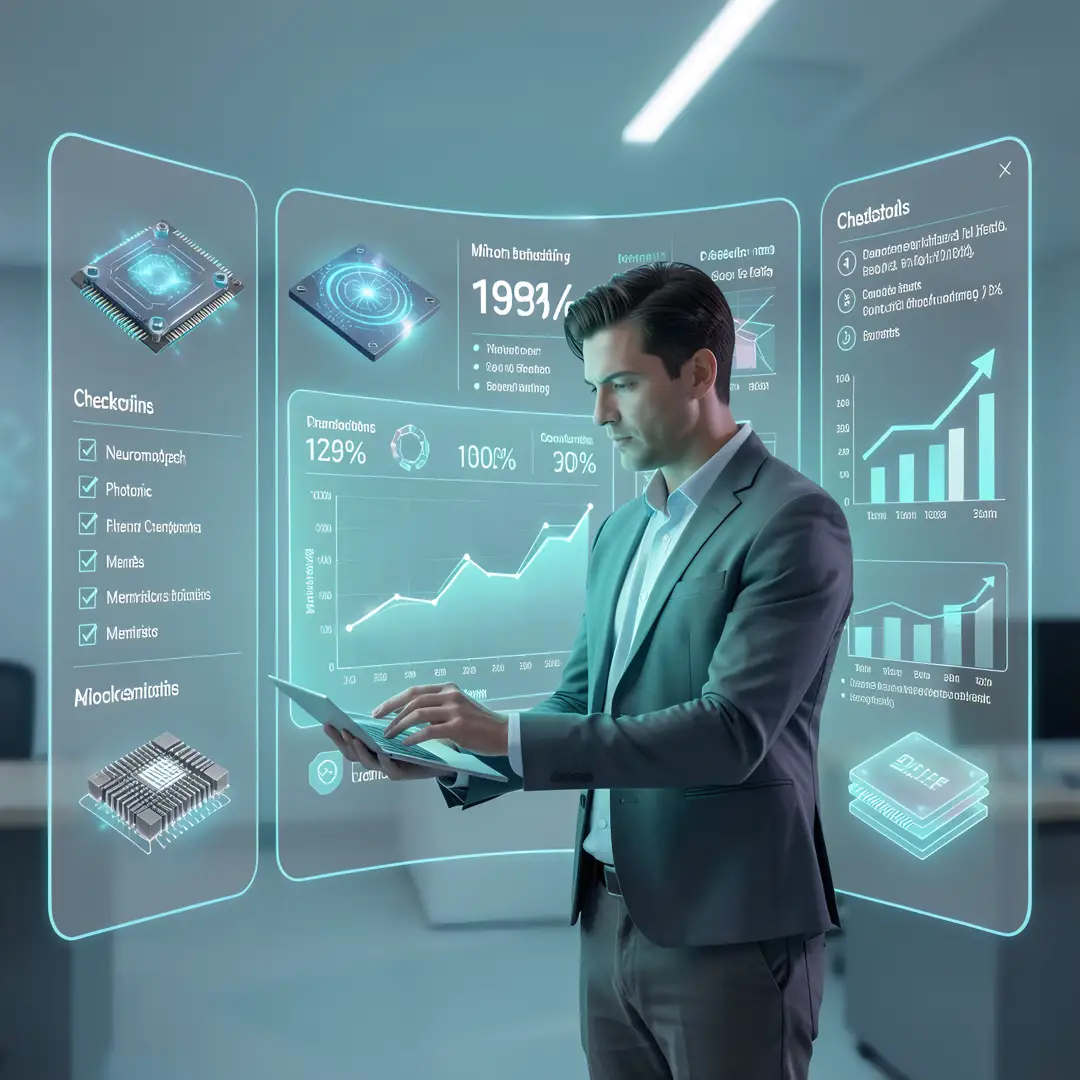
Review what you have learned and how your goals are evolving. Keep a simple log of key developments, results from your experiments, and changing vendor roadmaps. Reassess every few months. Hardware moves quickly, and a technology that was impractical last year may be ready for a pilot this year. Consistent monitoring turns scattered information into genuine insight.
FAQ
What should I know about Emerging Hardware Technologies That Could Transform Computing?
The most important thing to understand is that these technologies are diverse and at very different stages of maturity. Neuromorphic and photonic computing, processing-in-memory, chiplets, and new memory types are already appearing in commercial products or limited deployments. Quantum computing remains largely experimental for broad use but is advancing rapidly. None of them will replace conventional silicon overnight; instead, they will likely be adopted alongside existing hardware for specific workloads where they offer clear advantages in speed, energy, or capability. Your best move is to understand the fundamentals, follow reliable primary sources, and evaluate each technology against the problems you actually need to solve.
Who is this guide for?
This guide is written for general readers who want clear, actionable information without unnecessary jargon. That includes technology professionals who need a big-picture view, students exploring computer engineering, business leaders evaluating infrastructure investments, and curious.
You now have a solid foundation for Emerging Hardware Technologies That Could Transform Computing. Apply the best practices above and revisit this guide as your needs evolve.