Every product has a story—from the first design sketch to the moment it reaches a customer’s hands. Digital thread technology connects those stages by creating a continuous, shared flow of data across design, manufacturing, and service teams. Instead of scattered files and siloed systems, you get one reliable source of truth that follows a product through its entire lifecycle.
In this article, we’ll break down what digital thread technology is, how it differs from related concepts like the digital twin, and where it delivers real value. You’ll also see practical examples across industries and learn how to get started—whether you’re an engineer, a manager, or simply curious about the future of connected manufacturing.
Introduction
Digital thread technology is one of those terms that gets used a lot in engineering, manufacturing, and technology circles, but rarely gets explained in plain language. At its core, a digital thread is a connected flow of data that follows a product, asset, or process through its entire lifecycle — from the first sketch or requirement all the way through design, production, operation, maintenance, and eventually retirement or recycling. Instead of information living in disconnected spreadsheets, emails, PDFs, and isolated software systems, the digital thread links those pieces together so that anyone who needs the data can find it, trust it, and act on it.
This article explores What Is Digital Thread Technology and How Is It Used with clear, practical guidance. You do not need to be an engineer or a data scientist to follow along. If you have ever wondered why a certain part failed, why a project ran over budget, or why two departments seem to be working from different versions of the truth, the digital thread is a concept that directly addresses those problems. Understanding the fundamentals of What Is Digital Thread Technology and How Is It Used helps you make informed decisions — whether you are evaluating software, managing a team, or simply trying to understand how modern products are built and maintained.
The value of a digital thread is not just technical. It is organizational. It changes how people collaborate, how quickly problems are solved, and how confidently leaders can make decisions. As you read through the following sections, keep in mind that reliable information and consistent habits lead to better long-term outcomes. The same is true here: a digital thread is only as good as the data that feeds it and the discipline of the people who maintain it.
Key Concepts
Before diving into tools and implementation, it helps to understand the handful of core ideas that make digital thread technology work.

The difference between a digital thread and a digital twin
These two terms are often used together, but they mean different things. A digital twin is a virtual replica of a physical object — for example, a 3D model of a jet engine that updates with real-world sensor data. A digital thread is the connective tissue that links the twin to everything else: the original design requirements, the manufacturing records, the maintenance history, and the performance data. You can have a digital twin without a digital thread, but the twin becomes far more useful when the thread ties it to the full lifecycle.

Lifecycle data and traceability
At the heart of the digital thread is traceability. Every change, decision, and measurement is recorded and linked to what came before. If a supplier changes a material, that change is visible in the design file, the bill of materials, the quality report, and the field service manual. Traceability turns isolated facts into a narrative that anyone can follow.
Interoperability and standards
No single software vendor owns the entire lifecycle. A digital thread therefore depends on interoperability — the ability of different systems to exchange data using common formats and standards. Examples include STEP for 3D models, QIF for quality information, and various APIs that allow a CAD program to talk to a PLM (product lifecycle management) system, which in turn talks to an ERP (enterprise resource planning) system.
Closed-loop feedback
A mature digital thread is not a one-way pipeline. Data from the field — how a product actually performs, how often it fails, how customers use it — flows back to designers and engineers. This closed loop is what allows organizations to improve products continuously rather than waiting for the next major redesign.
- Authoritative source of truth: A single, agreed-upon data source for each piece of information.
- Context: Data is useless without knowing where it came from and what it relates to.
- Security and access control: Not everyone should see everything, but the right people need timely access.
- Change management: Every modification is logged, approved, and communicated.
Deep Dive
Now that the vocabulary is clear, let us look at how digital thread technology is actually used across industries and what it takes to make it work.
Where digital threads are used
Manufacturing and aerospace were early adopters. In aerospace, a digital thread might track a single aircraft component from design through certification, production, and thousands of flight hours. Automotive companies use threads to manage complex supply chains and recall investigations. Healthcare uses them to trace medical devices and pharmaceutical batches. Construction and infrastructure projects use them to connect building information models (BIM) with maintenance schedules and renovation history.
Even smaller organizations benefit. A custom furniture maker might use a lightweight digital thread to link a customer’s order, the cut list, the wood supplier’s batch number, and the final delivery photos. The scale changes, but the principle is the same: connect the dots so nothing gets lost.
The technology stack
A digital thread is not a single product you can buy off the shelf. It is an architecture that typically includes several layers:
- Data capture: CAD software, sensors, barcode scanners, and manual entry forms.
- Data management: PLM, ERP, MES (manufacturing execution systems), and data lakes.
- Integration: Middleware, APIs, and message brokers that move data between systems.
- Analytics and visualization: Dashboards, reporting tools, and sometimes AI models that flag anomalies.
- Governance: Policies, roles, and audit trails that keep the data trustworthy.
Common challenges
Implementing a digital thread is as much a human challenge as a technical one. Legacy systems often do not talk to each other. Departments may resist sharing data because they fear losing control. Data quality is frequently poor — duplicate entries, missing fields, inconsistent naming. And the cost of integration can be significant, especially for large, old organizations.
The most successful projects start small. They pick one product line or one process, prove the value, and then expand. They also invest heavily in data standards and training, because a thread breaks the moment people stop using it correctly.
Best Practices
If you are considering or already working with digital thread technology, these habits will improve your results.
- Start with a clear business problem. Do not build a digital thread just because it sounds advanced. Tie it to a specific pain point: reducing warranty costs, speeding up audits, or improving on-time delivery.
- Define your authoritative data sources. For every key data element, decide which system is the master. Ambiguity creates distrust.
- Standardize naming and formats early. Consistency is boring but essential. A part number should mean the same thing in every system.
- Involve the people who will use it. Engineers, technicians, and quality inspectors should help design the workflows. If the thread makes their jobs harder, they will work around it.
- Build in feedback loops. Make it easy for field data to flow back to design and planning teams.
- Prioritize security and access control. A connected thread is a bigger attack surface. Protect it accordingly.
- Measure and iterate. Track metrics like time-to-find information, error rates, and cycle times. Use the data to improve the thread itself.
- Document everything. A digital thread is only as good as the documentation that explains how it works and who owns each part.
Step-by-Step Guide
Use the following steps as a practical roadmap. They are written for a general audience, so adjust the details to your own context.
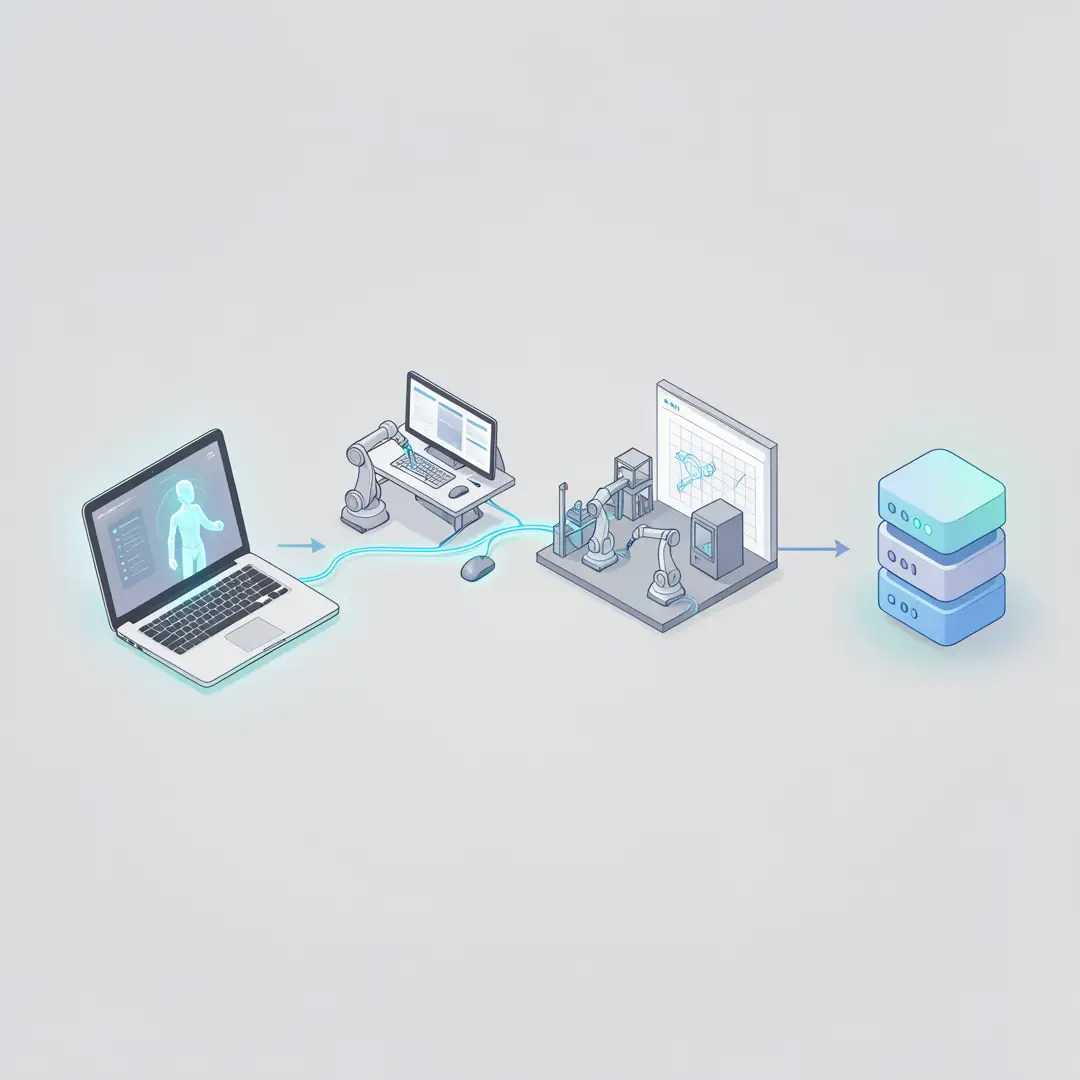
Step 1: Understand the fundamentals
Before you invest time or money, make sure you and your team share a common understanding of what a digital thread is and is not. Read introductory material, watch a few vendor-neutral webinars, and discuss how the concept applies to your specific products or processes. Write down a one-paragraph definition in your own words. If you cannot explain it simply, you are not ready to implement it.
Step 2: Assess your starting point
Take inventory of the data you already have and where it lives. Which systems hold design data? Where are manufacturing records stored? How is maintenance history tracked? Identify the gaps, the duplicates, and the manual workarounds. A simple spreadsheet listing each data type, its current location, and its owner is often enough to reveal where the biggest opportunities lie.

Step 3: Set clear goals
Define what success looks like. Goals should be specific and measurable. For example: “Reduce the time required to trace a defective part from three days to two hours” or “Cut duplicate data entry by 40 percent within six months.” Avoid vague goals like “improve collaboration.” Clear goals keep the project focused and make it easier to justify continued investment.

Step 4: Gather necessary resources
Digital thread projects need three kinds of resources: people, technology, and budget. Assign a project owner who has authority to make decisions across departments. Identify the software tools you already own that can be repurposed. If you need new tools, start with integration platforms rather than replacing entire systems. Set aside budget for training, because adoption is the most common point of failure.

Step 5: Apply the core methods
Begin connecting systems one link at a time. Start with the highest-value connection — often between design and manufacturing, or between production and field service. Use APIs or middleware to move data automatically where possible. Where automation is not feasible, use standardized templates and checklists to keep data consistent. Throughout this step, document every connection, including what data flows, how often, and who is responsible for its accuracy.

Step 6: Monitor your progress
Once the first connections are live, track your metrics regularly. Hold short review meetings to identify what is working and what is not. Celebrate early wins to build momentum. Be prepared to adjust your approach — digital thread implementations are iterative, not one-and-done projects. Over time, expand the thread to cover more of the lifecycle and more product lines.
FAQ
What should I know about What Is Digital Thread Technology and How Is It Used?
The most important thing to know is that a digital thread is not.
You now have a solid foundation for What Is Digital Thread Technology and How Is It Used. Apply the best practices above and revisit this guide as your needs evolve.