The future of personal AI devices is arriving faster than most people realize. From smart glasses that translate conversations in real time to pocket-sized assistants that manage your schedule, the next wave of technology promises to be more intuitive, portable, and personal than ever before.
In this article, we break down what’s coming, which devices are worth your attention, and how to prepare for a world where AI travels with you everywhere. Whether you’re a tech enthusiast or just curious, here’s what you need to know.
Introduction
Personal AI devices have moved from science fiction to everyday reality in a remarkably short time. What began as basic voice assistants on phones has evolved into a growing category of dedicated hardware: smart glasses, wearable pendants, AI earbuds, pocket-sized assistants, and ambient computing devices that live in your home. This article explores The Future of Personal AI Devices with clear, practical guidance. Rather than hyping the technology, the goal here is to help you understand what these devices actually do, where they are heading, and how to make smart choices about whether—and how—to bring them into your life.
The stakes are real. A personal AI device is not just another gadget; it often listens continuously, records ambient information, and processes data about your habits, conversations, and preferences. That makes informed decision-making essential. Understanding the fundamentals of The Future of Personal AI Devices helps you make informed decisions, whether you are a curious early adopter, a busy professional looking for productivity gains, or someone simply trying to keep up with a fast-moving field.
You do not need to be a technologist to benefit from this guide. You need a willingness to ask good questions, a bit of skepticism toward marketing claims, and a consistent approach to testing what actually works for you. Reliable information and consistent habits lead to better long-term outcomes—both in how you use these devices and in how you protect your privacy and attention.
Key Concepts
Before diving into predictions and practical steps, it helps to get clear on the vocabulary. The personal AI device space is full of overlapping terms, and confusing them can lead to poor purchasing decisions.

What counts as a personal AI device?
Broadly, a personal AI device is any hardware designed primarily to deliver AI-powered assistance to an individual user, rather than to a household or an organization. That includes:
- Wearables: smart glasses, AI pins or pendants, and smartwatches with on-device language models.
- Audio devices: earbuds that translate conversations in real time, summarize meetings, or answer questions hands-free.
- Ambient assistants: tabletop or home devices that observe context, manage schedules, and control smart home systems.
- Pocket companions: small screenless or screen-light devices that pair with your phone and act as a persistent AI interface.

The three layers of a personal AI device
Almost every device in this category is built from three layers, and understanding them helps you evaluate any product:
- The sensor layer: microphones, cameras, motion sensors, and biometric sensors that gather input from the world around you.
- The model layer: the AI that interprets that input—speech recognition, language understanding, vision models, and increasingly small on-device models.
- The action layer: what the device does with its understanding—answering, reminding, summarizing, translating, or triggering other apps and services.
Where these layers live matters enormously. If the model layer runs in the cloud, your data leaves the device. If it runs on-device, more stays local but capability may be more limited. The future is likely a hybrid, but today the trade-off is real and worth checking before you buy.
Why the category is accelerating now
Three forces are converging. First, AI models have become dramatically smaller and more efficient, making on-device processing feasible. Second, battery and chip technology has improved enough to support always-on sensing without constant charging. Third, user expectations have shifted—people increasingly want assistance that is ambient and immediate rather than something they must deliberately open an app to access.
Deep Dive
To understand where personal AI devices are going, it helps to look at the forces shaping them and the realistic timeline for change.
The shift from apps to ambient assistance
For fifteen years, the dominant model of computing has been the app: you open a program, perform a task, and close it. Personal AI devices challenge that model. Instead of navigating interfaces, you simply speak, gesture, or let context trigger assistance. The device becomes a layer over your day rather than a destination you visit.
This shift has real consequences. It reduces friction—no more unlocking a phone to set a reminder—but it also raises the risk of distraction and over-reliance. The most successful devices in this space will likely be those that know when to stay quiet.
Privacy as a design battleground
Every always-on device creates a tension between usefulness and surveillance. Companies are responding in different ways. Some emphasize on-device processing and local storage. Others use visible recording indicators, physical mute switches, or automatic data expiration. As a user, your job is to read the fine print: where is data processed, how long is it retained, and can you delete it?
Regulation is also catching up. Laws like the EU’s AI Act and various state-level privacy rules are beginning to define what these devices may and may not do. Expect compliance features—consent prompts, data dashboards, and transparency reports—to become selling points rather than afterthoughts.
The near-term roadmap
Over the next three to five years, several developments are likely:
- Better on-device models: capable enough to handle most everyday tasks without cloud round-trips.
- Longer battery life: the single biggest constraint on always-on wearables today.
- Interoperability: devices that work across ecosystems rather than locking you into one brand.
- Multimodal input: combining voice, vision, and gesture for more natural interaction.
- Personalization that stays private: models that adapt to you without shipping your data to a server.
What is less certain is which form factors will win. Smart glasses have repeatedly been predicted to break through and repeatedly stumbled on social acceptability and battery life. Pins and pendants have struggled with unclear value propositions. The most likely outcome is not a single winning device but a mix, with your phone remaining the hub for the foreseeable future.
Best Practices
Whether you already own a personal AI device or are considering your first, a few habits separate satisfying users from frustrated ones.
- Start with one clear use case. Buy or adopt a device to solve a specific problem—meeting notes, language translation, hands-free reminders—rather than because it seems futuristic.
- Read the privacy policy before setup. Know where your data goes, how long it is kept, and how to delete it. Check whether recording can be paused easily.
- Set boundaries early. Decide where the device is allowed—for example, not in bedrooms or during private conversations—and stick to those rules.
- Test in low-stakes situations. Try the device in casual settings before relying on it for anything important.
- Keep software updated. Security patches and model improvements arrive through updates; skipping them leaves you with an inferior and less safe device.
- Review your usage monthly. Ask whether the device is actually saving you time or merely adding another screen to manage.
These habits are not glamorous, but they reflect a simple truth: reliable information and consistent habits lead to better long-term outcomes. The people who get the most from personal AI devices tend to be those who treat them as tools with defined roles, not as novelties.
A Step-by-Step Approach
If you want to adopt personal AI devices thoughtfully, follow these six steps. They work whether you are buying your first device or reassessing ones you already own.

Step 1: Understand the fundamentals
Before spending money or changing habits, make sure you grasp the basics covered earlier: what these devices are, how the sensor, model, and action layers work, and where data is processed. Spend an hour reading independent reviews and comparison guides rather than relying solely on manufacturer marketing. Understanding the fundamentals of The Future of Personal AI Devices helps you make informed decisions and protects you from hype-driven purchases.
Step 2: Assess your starting point
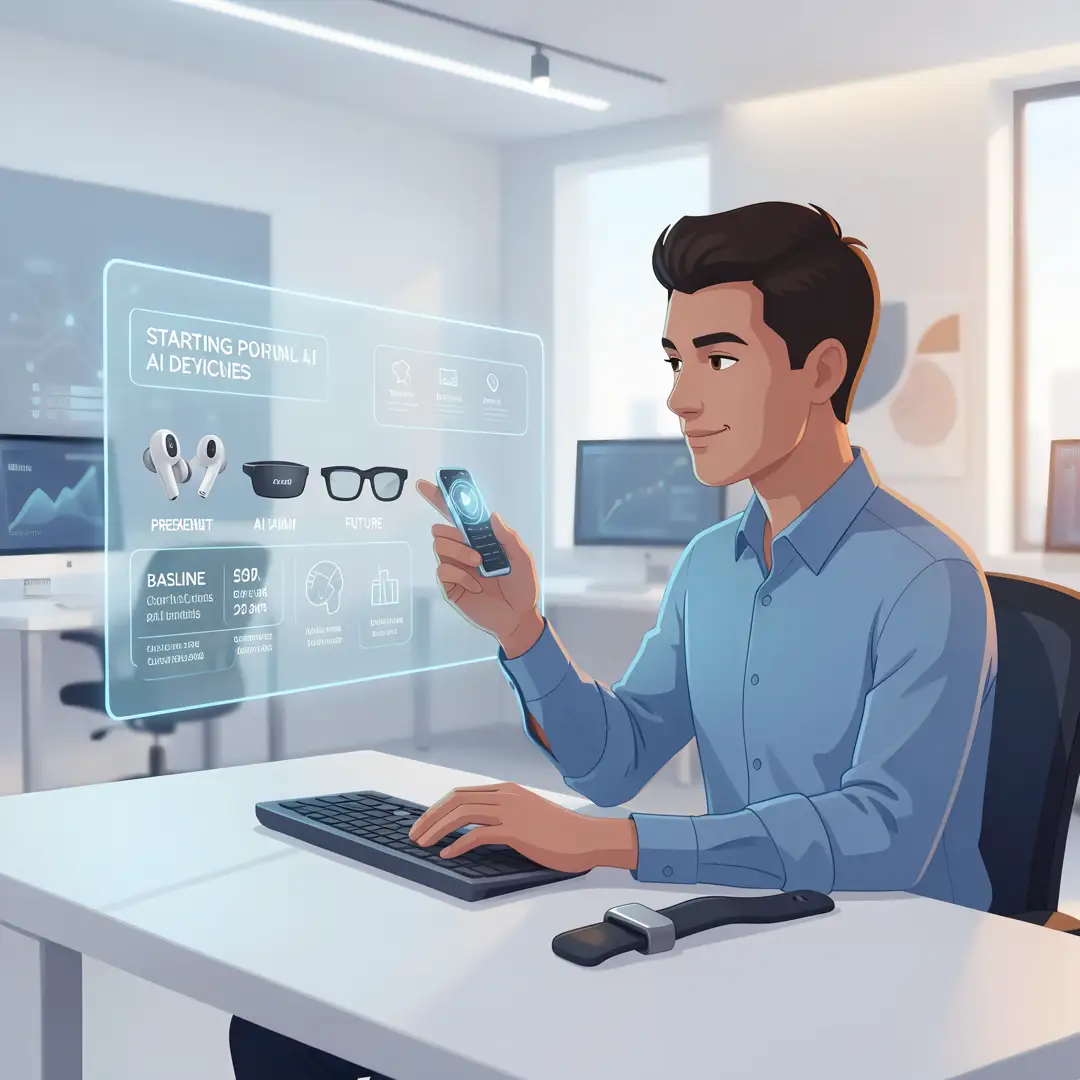
Take stock of what you already own and use. Do you have a smartwatch that already handles reminders? A phone assistant you rarely use? A smart speaker gathering dust? Your existing setup defines what a new device would actually add. Write down the tasks you currently do manually that you wish were automatic—those are your candidates.
Step 3: Set clear goals
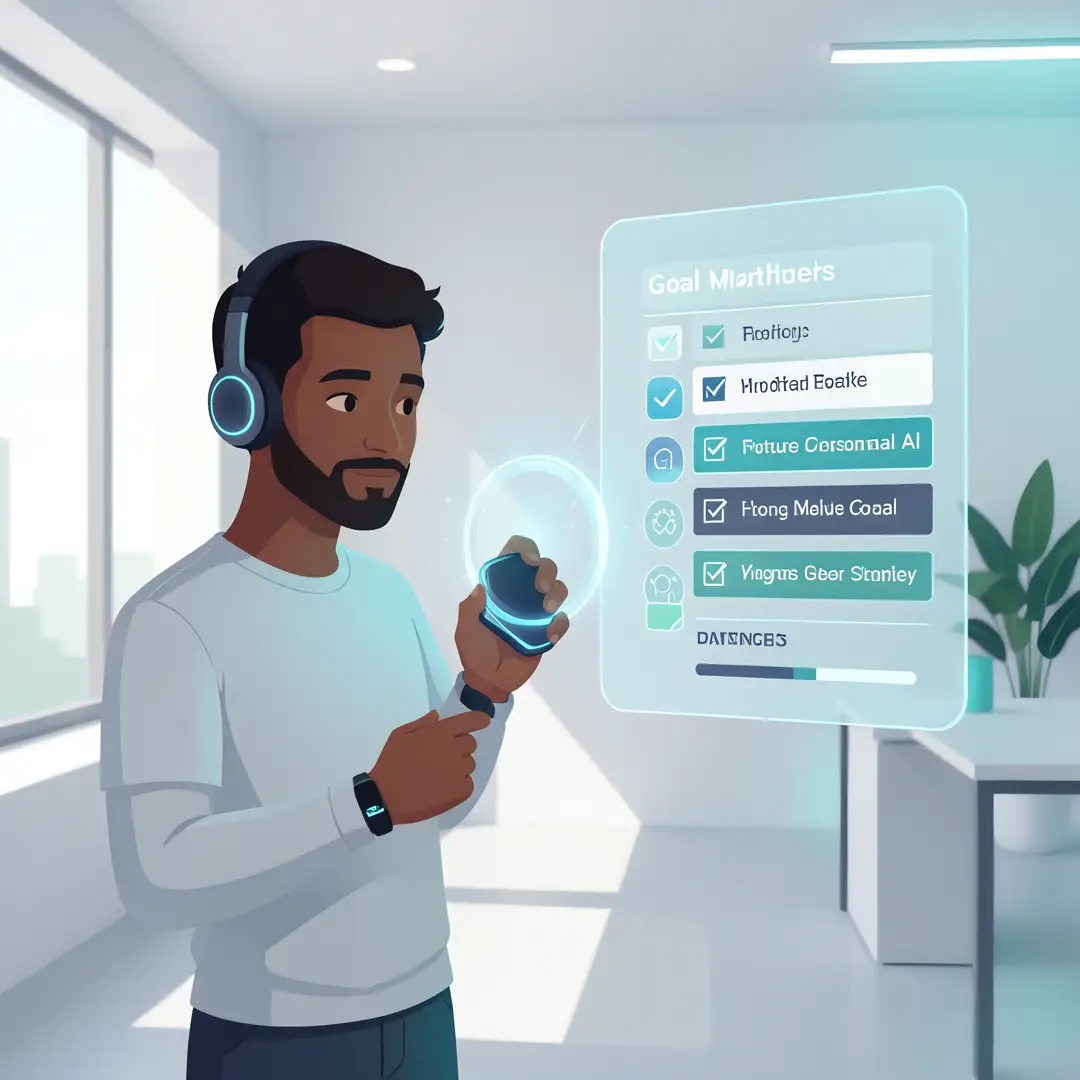
Define what success looks like in concrete terms. “I want to stop taking meeting notes by hand” is a clear goal. “I want to be more productive” is not. Limit yourself to one or two goals for your first device; trying to solve everything at once usually solves nothing.

Step 4: Gather necessary resources
This includes more than money. Consider the time to learn the device, the charging routine it requires, any subscription fees for AI features, and the accessories needed for comfortable daily use. Check compatibility with your phone, calendar, and other tools. A device that does not integrate with what you already use will quickly be abandoned.

Step 5: Apply the core methods
Now put the device to work on your chosen goals. Use it daily for at least two weeks before judging it. During this period, follow the best practices above: keep it updated, respect your own privacy boundaries, and note what works and what frustrates you. Resist the urge to add more use cases until the first one is solid.
Step 6: Monitor your progress
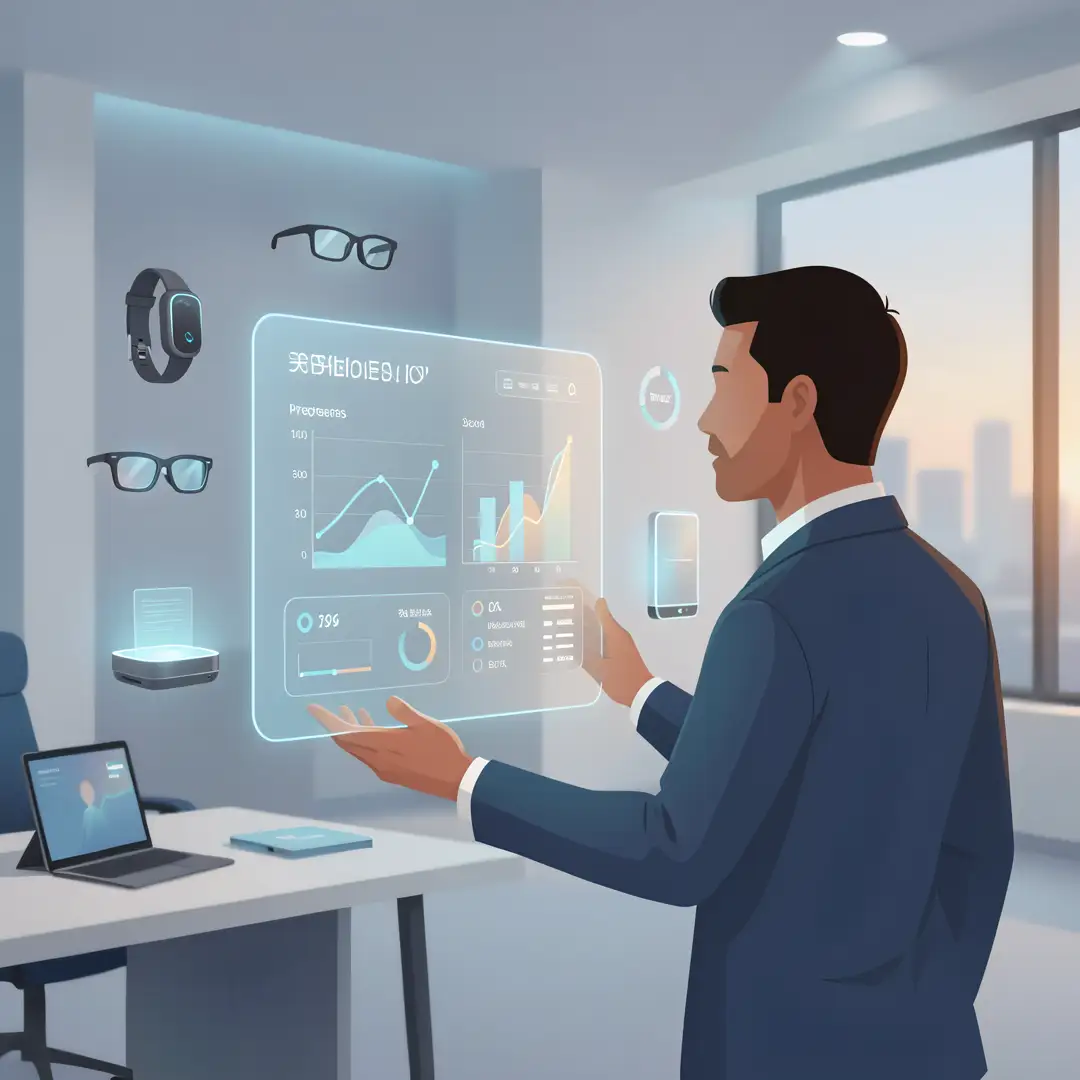
At the end of the trial period, review honestly. Is the device saving you time? Is it protecting your privacy as promised? Are you using it or is it sitting in a drawer? Based on your answers, either expand its role, adjust how you use it, or return or resell it. Repeat this review monthly for the first few months, then quarterly thereafter.
FAQ
What should I know about The Future of Personal AI Devices?
The most important thing to know is that the category is evolving quickly, so no single purchase is future-proof. Focus on fundamentals: how data is handled, whether the device solves a real problem for you, and whether the company has a track record of updates and support. Also recognize that the future is likely to be multi-device; your phone will probably remain the hub, with personal AI devices acting as specialized extensions rather than replacements. Finally, keep expectations realistic—today’s devices are genuinely useful in narrow areas but far from the omni-capable assistants portrayed in advertising.
Who is this guide for?
This guide is written for general readers who want clear, actionable information without technical jargon. That.
You now have a solid foundation for The Future of Personal AI Devices. Apply the best practices above and revisit this guide as your needs evolve.